
SaaS positioning: sell a clear use case
Direct answer
Explain who uses the software, in what situation and for which task. A concrete use case helps buyers recognize their need and understand what they should evaluate before choosing a plan.
A platform with many features still needs a clear entry point for each audience.
Choose a buying situation
Talk to people facing the problem and identify how they complete the task today. Instead of promising abstract productivity, describe the work the software organizes. Define what it does not solve too. This boundary avoids attracting evaluations whose success depends on a missing feature or an integration that has not been confirmed. An explicit success criterion also keeps the demonstration connected to the promise presented.
Write a proposition you can demonstrate
- Audience: which team encounters this problem repeatedly?
- Situation: when does the current approach stop being adequate?
- Task: which action will the buyer be able to observe in the product?
Organize the information behind the offer
Iterfunnel's Products area brings together information that helps explain an offer. For a SaaS business, prepare a record for each plan with its intended audience, available features, relevant limits and the correct next-step link. Separate the subscription from additional services such as implementation or training so that buyers understand what is included. Check the details with the product owner before using them in conversations. When pricing, scope or availability changes, review examples and agent instructions too. An old answer can remain convincing even after it stops being accurate. The catalog organizes commercial communication; it does not replace the system that calculates charges, applies discounts or manages subscriptions. For questions about special terms, identify who can confirm the proposal and what must be checked before replying. Keep that decision consistent across the team.
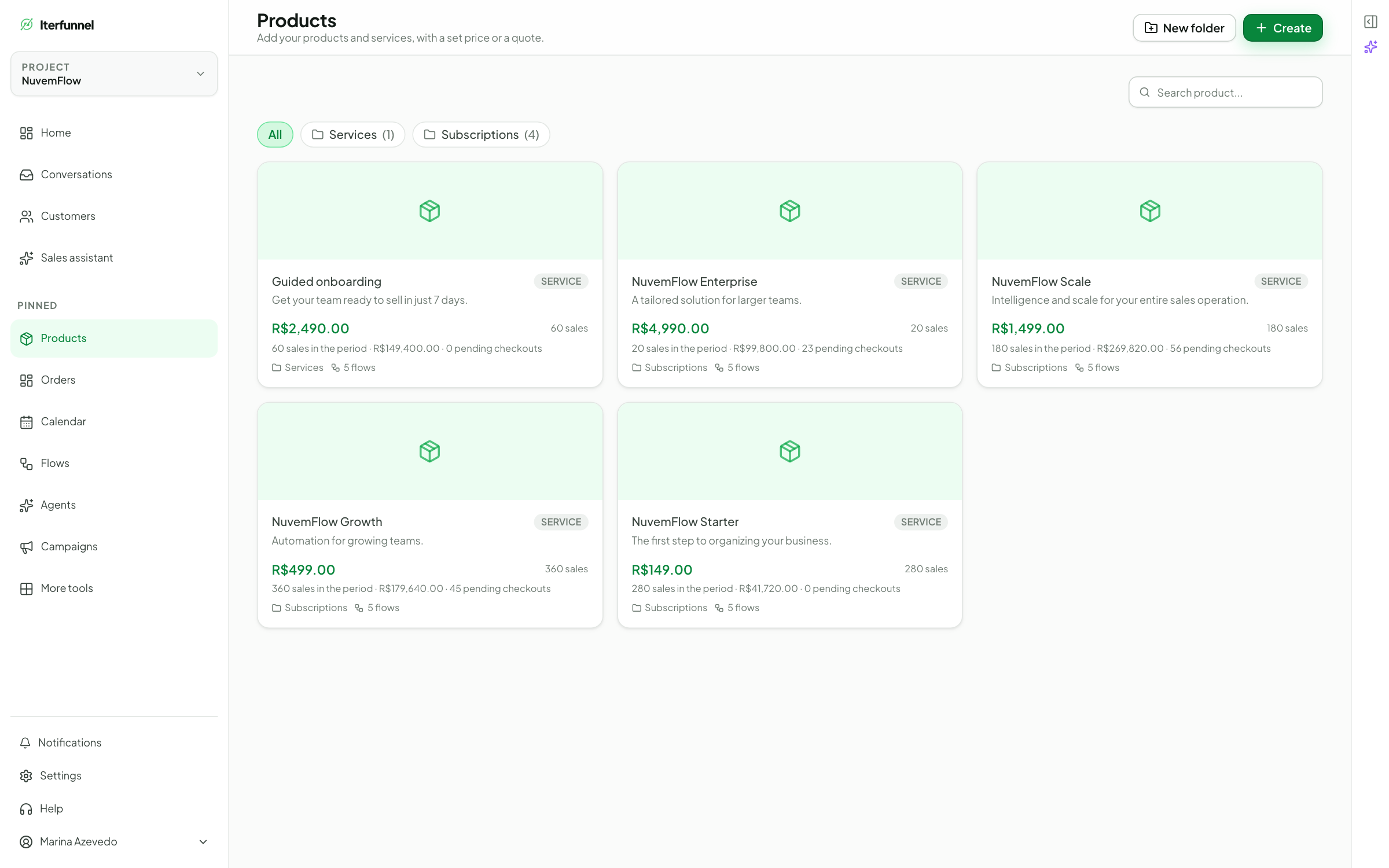
Put this workflow into practice with the Iterfunnel free trial, using your plan and a real use case as a reference.
From features to a demonstration
A fictional proposal management offer might begin with “centralize your team's open proposals and track the next review”. In the demo, show a proposal arriving, a person taking responsibility and the available history. This journey supports the message better than displaying every menu. If the main requirement is tax document issuance and the product lacks it, state the incompatibility.
Check the hypothesis against conversations
Use Iterfunnel's conversation history to recover a prospect's own words and the context behind each reply. Read contacts who declined the offer or went quiet as well; looking only at sales gives an incomplete picture. Record separately what the person stated, what you observed and what remains a hypothesis. An integration question establishes uncertainty, but it does not establish that the integration is the only obstacle to purchase. During review, look for unanswered questions, commitments without follow-up and explanations that caused confusion. Choose one passage to improve and preserve the context needed by whoever takes over the conversation. Do not copy personal data or confidential information into training examples. When evaluating the change, return to comparable conversations and check whether the question was resolved, alongside any progress toward a commercial decision.
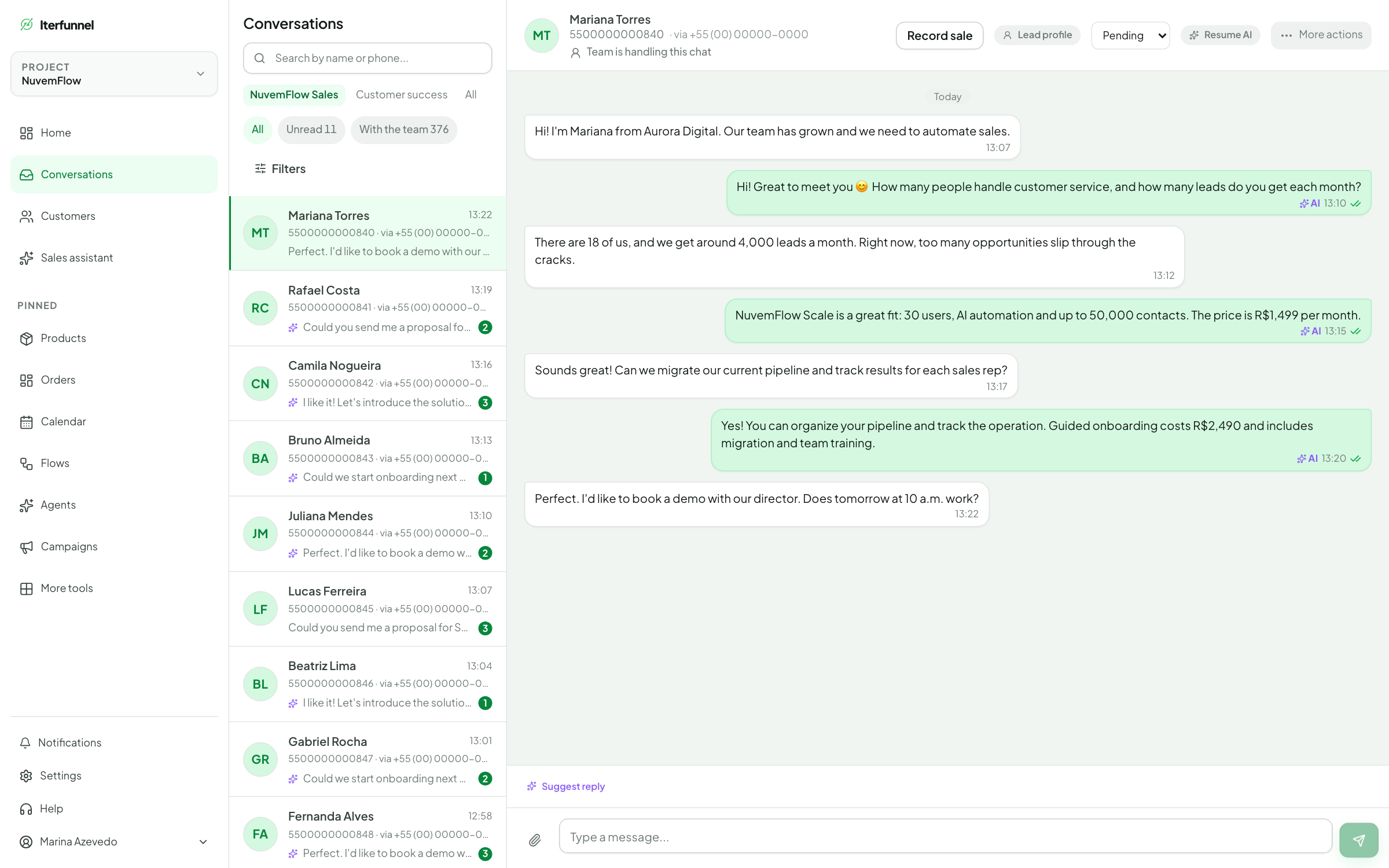
Use the free trial to review replies, organize opportunities and test sales follow-up before expanding your operation.
Frequently asked questions
Must I serve only one segment?
No. Choose an entry message for each context while preserving the product's actual scope. Different audiences can require different examples and demonstration scripts.
Does positioning require changing the software?
Not always. First check whether the difficulty concerns understanding the offer. If the central task cannot be completed, review the product or intended audience.
Does Iterfunnel replace my SaaS systems?
The platform organizes conversations, agents, flows and CRM. Software usage, billing and subscription management remain in your systems. Any automation relying on those records needs validated access and integration.
Sources and references
References support the points indicated; examples and workflows are editorial suggestions from Iterfunnel.
- Iterfunnel for software and SaaS — The platform’s own description of agents, flows, CRM, Copilot, AI Brain and the free trial. Scripts and calculations in this guide are editorial examples.