
How to define your SaaS ideal customer profile
Direct answer
An ideal customer profile describes conditions in which the SaaS can deliver its promised use. Consider the problem, workflow, requirements and ability to get started. Use company characteristics only when they explain fit.
An enthusiastic contact may depend on an unavailable feature; a cautious one may have a suitable use case.
Define observable fit criteria
Start with the task the product solves and the conditions needed to perform it. Team size, process type and required integrations may matter. Avoid making company size a rule without establishing why. Record incompatibility criteria too, so an entire demo is not spent trying to work around a limitation that prevents use. Document the reason behind each criterion so it can be reviewed when the product changes.
Separate three kinds of information
- Compatibility: tasks and requirements supported by current scope.
- Feasibility: an owner and practical conditions for getting started.
- Timing: the priority and decision process reported by the contact.
Organize the information behind the offer
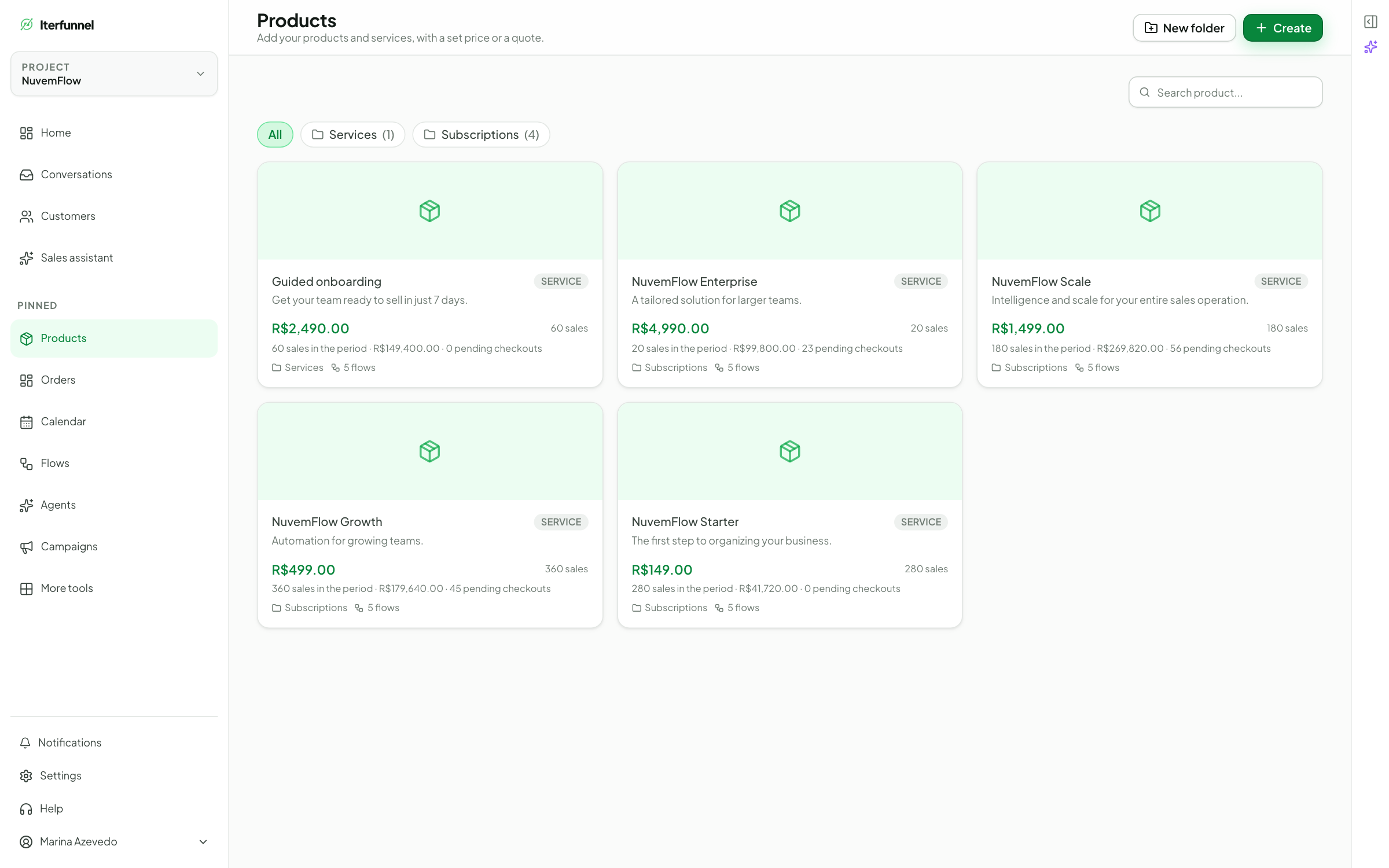
Iterfunnel's Products area brings together information that helps explain an offer. For a SaaS business, prepare a record for each plan with its intended audience, available features, relevant limits and the correct next-step link. Separate the subscription from additional services such as implementation or training so that buyers understand what is included. Check the details with the product owner before using them in conversations. When pricing, scope or availability changes, review examples and agent instructions too. An old answer can remain convincing even after it stops being accurate. The catalog organizes commercial communication; it does not replace the system that calculates charges, applies discounts or manages subscriptions. For questions about special terms, identify who can confirm the proposal and what must be checked before replying. Keep that decision consistent across the team.
Put this workflow into practice with the Iterfunnel free trial, using your plan and a real use case as a reference.
A coherent prioritization example
Two companies seek proposal software. The first needs to organize a small team using the available workflow. The second requires an unsupported integration, despite having a larger budget. Prioritizing potential revenue alone can shift effort toward an impossible sale. Record the incompatibility and its reason, while giving the first opportunity a next step appropriate to its current situation and readiness to evaluate.
Turn the diagnosis into a next step in CRM
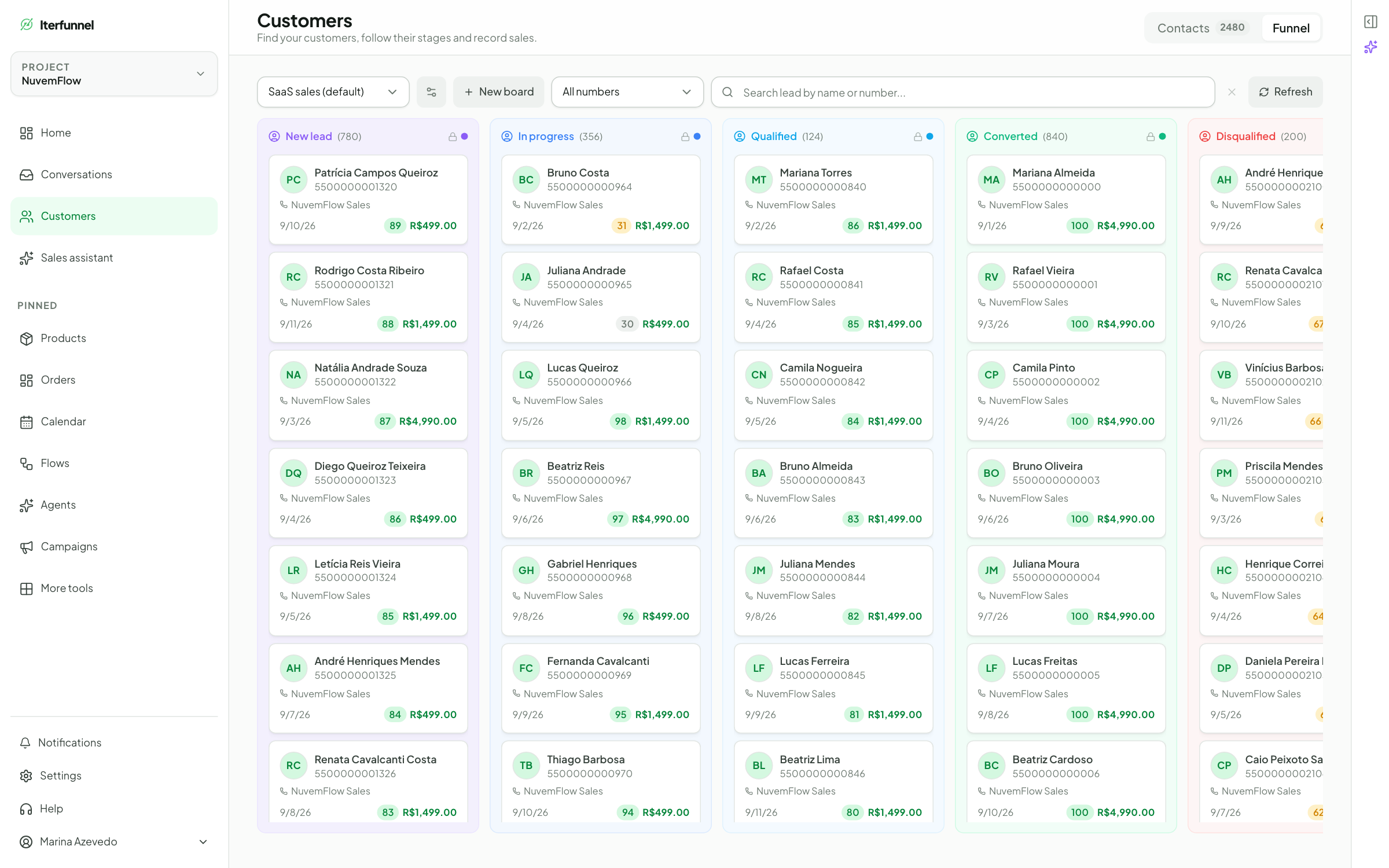
Iterfunnel CRM helps you see where each opportunity stands. Define criteria another person can verify: conversation started, need understood, demo agreed and decision pending, for example. A stage name should describe a commercial situation, rather than an impression of the lead's enthusiasm. Agree on who follows the opportunity and what needs to happen next. Review the history before moving a contact so that sending a link does not become a completed demo. Record a subscription after confirming it in the system responsible for billing. This discipline helps you find forgotten opportunities and discuss priorities using actual events. If a field or event you need is not available, keep a supporting record and validate the integration before relying on automation. The screenshot illustrates sales organization; it does not establish automatic synchronization with your software.
Use the free trial to review replies, organize opportunities and test sales follow-up before expanding your operation.
Frequently asked questions
Should the profile be fixed?
No. Review it using usage evidence, implementation experience and loss reasons. Product changes can alter which requirements are supported.
Should an unsuitable lead be ignored?
No. Explain the limitation respectfully and offer a suitable handover when available. Avoid promising fit simply to keep the contact in the funnel.
Does Iterfunnel replace my SaaS systems?
The platform organizes conversations, agents, flows and CRM. Software usage, billing and subscription management remain in your systems. Any automation relying on those records needs validated access and integration.
Sources and references
References support the points indicated; examples and workflows are editorial suggestions from Iterfunnel.
- Iterfunnel for software and SaaS — The platform’s own description of agents, flows, CRM, Copilot, AI Brain and the free trial. Scripts and calculations in this guide are editorial examples.