
SaaS sales metrics: what to track
Direct answer
Choose metrics answering specific decisions: contact quality, evaluation progress and confirmed subscriptions. Define an event, population and period for each indicator. Collected revenue and monthly recurring revenue answer different questions.
A dashboard full of numbers only helps when the team knows which action each indicator can inform.
Create a metric dictionary
For each rate, write its numerator, denominator, data source and review frequency. Separate companies from individuals when several people participate in one opportunity. Document how to handle duplicates and reopened cases. Use the subscription system to confirm recurring revenue; CRM follows the sales journey and depends on the quality of records it receives. Keep indicator names consistent across reports and sales review meetings.
Start with operational indicators
- Qualification: suitable opportunities among contacts assessed.
- Demonstrations: completed meetings among agreed meetings.
- Subscriptions: confirmed customers among evaluations given enough time to decide.
Compare records that answer the same question
Iterfunnel Reports help you follow data recorded in the sales operation. Before interpreting a rate, write down the event counted, the group in the denominator and the period allowed for that group to progress. New contacts, opportunities, customers and charges are not interchangeable units. One customer may have several conversations or multiple payments. When analyzing subscriptions, confirm status in the billing system and preserve consistent identification across the records you compare. Do not treat total receipts as MRR: one-off payments, implementation and different periods may contribute to that amount. NuvemFlow screenshots are fictional and include services alongside subscriptions; their numbers are neither targets nor actual results. Use comparisons to locate an operational question, then investigate its cause in conversations. A dashboard alone does not demonstrate that changing a reply caused the observed outcome.
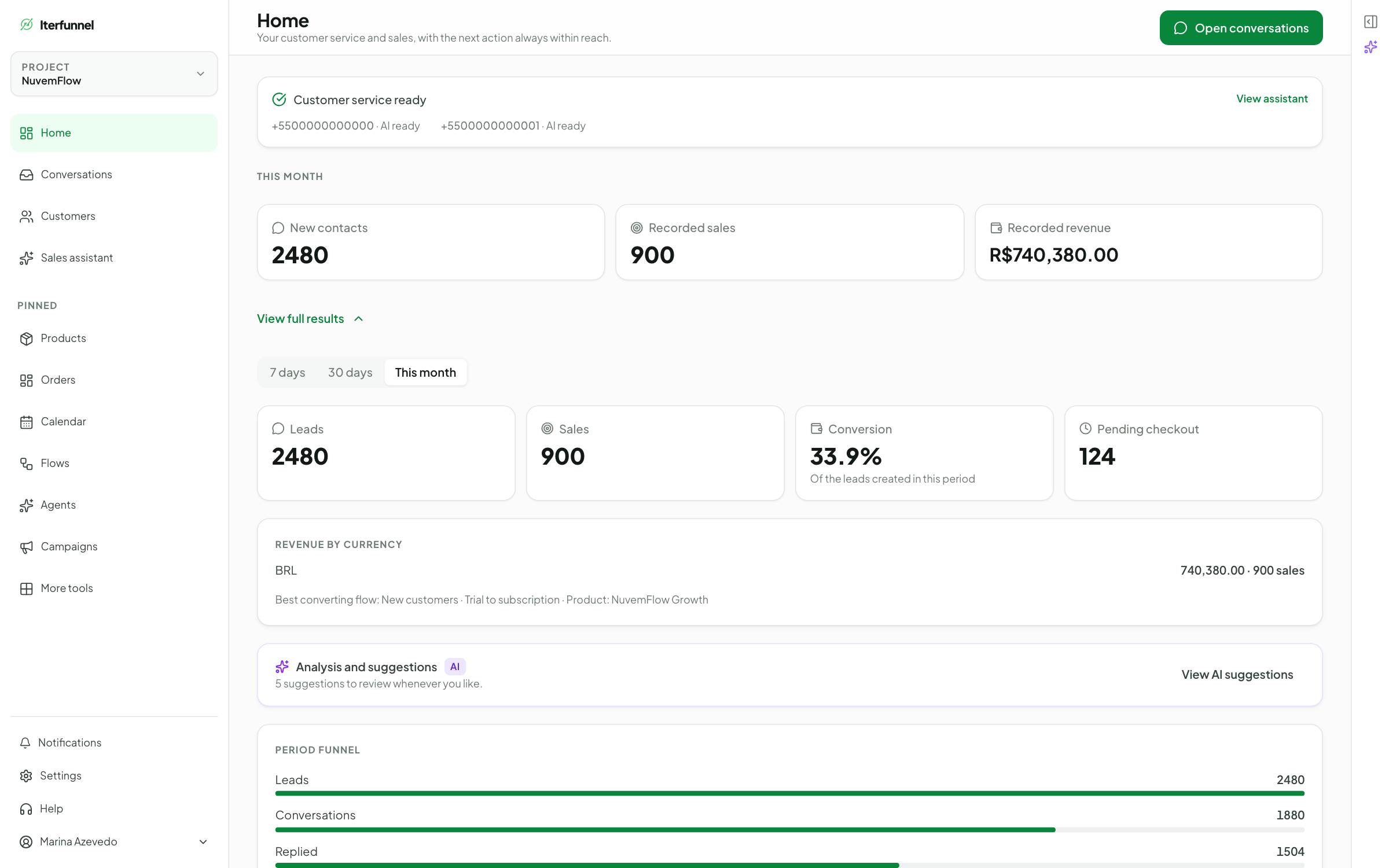
Put this workflow into practice with the Iterfunnel free trial, using your plan and a real use case as a reference.
One calculation, two questions
In a hypothetical example, 100 contacts generate 25 qualified opportunities and five subscriptions. Overall conversion is 5/100, or 5%; among qualified opportunities, it is 5/25, or 20%. Neither rate should appear without its reference group. If implementation revenue exists, keep it separate from recurring analysis. Record the cutoff date so the next comparison uses consistent criteria across the same kind of population.
Turn analysis into a testable hypothesis
Iterfunnel's AI Brain analyzes conversations, ads and recorded sales to suggest improvements. A useful suggestion should point to behavior the team can check. If the analysis identifies confusion about plans, open the relevant conversations and see which limits were unclear. Choose a small change, describe its expected effect and record when it started. Avoid changing the audience, price and replies simultaneously if you want to understand which adjustment mattered. During review, consider alternative explanations, such as a different source of prospects or opportunities that have not had time to decide. Analysis depends on the available records; it does not replace software usage data or independently confirm external payments. If evidence is insufficient, leave the conclusion open and specify what information should be gathered in the next review cycle. Keep the decision tied to what the team can verify.
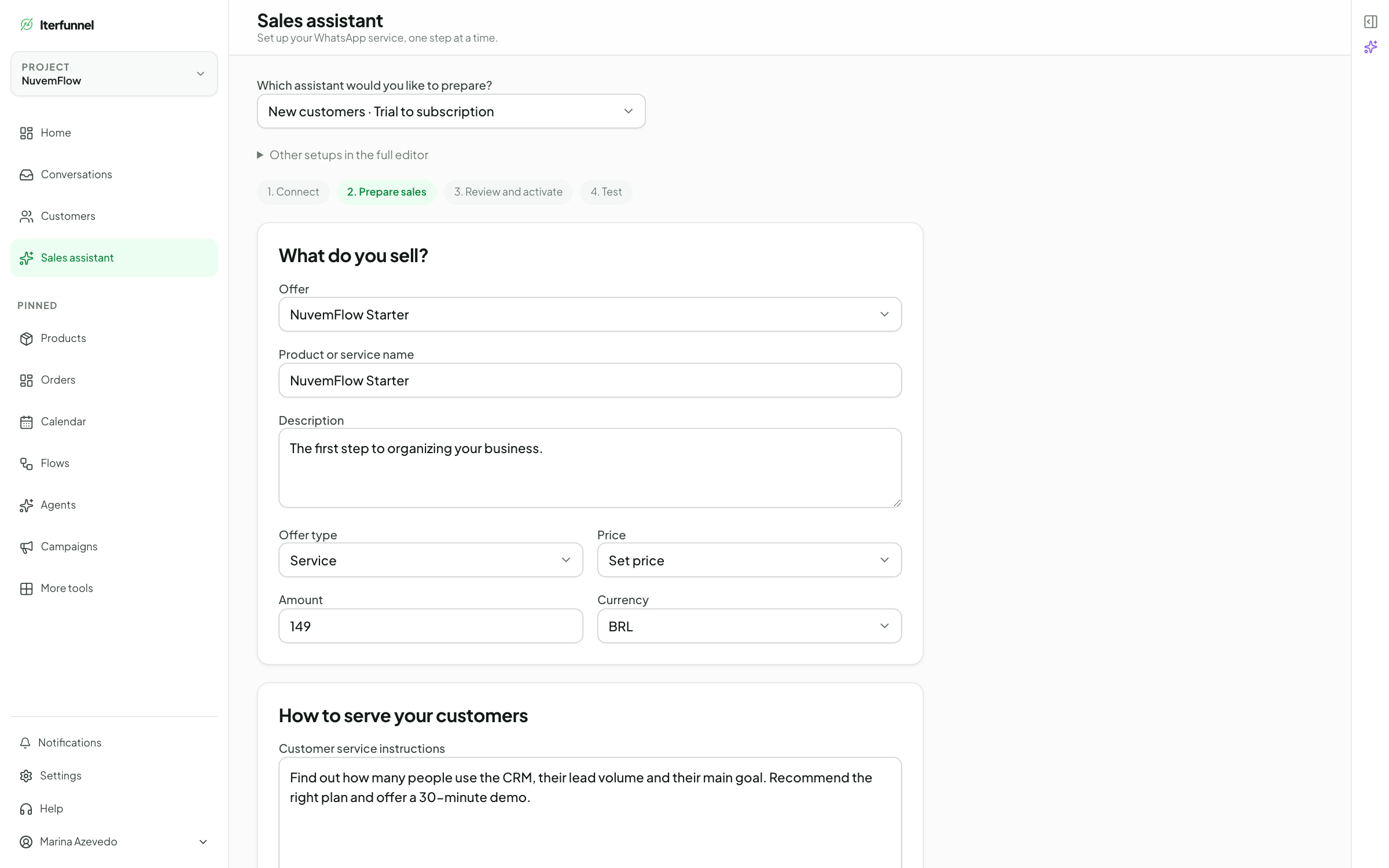
Use the free trial to review replies, organize opportunities and test sales follow-up before expanding your operation.
Frequently asked questions
Do I need a benchmark to begin?
No. Start with reliable definitions and your own baseline. External comparisons require a similar audience, sales cycle and product context.
Can I calculate recurring revenue from total sales?
Not directly. Check subscription components in the billing system and separate one-off payments, billing periods and contract changes.
Does Iterfunnel replace my SaaS systems?
The platform organizes conversations, agents, flows and CRM. Software usage, billing and subscription management remain in your systems. Any automation relying on those records needs validated access and integration.
Sources and references
References support the points indicated; examples and workflows are editorial suggestions from Iterfunnel.
- Iterfunnel for software and SaaS — The platform’s own description of agents, flows, CRM, Copilot, AI Brain and the free trial. Scripts and calculations in this guide are editorial examples.